Practicing in pairs
One colleague performs the task wearing the VR headset, while the other watches along. Afterward, they switch and discuss what went well and what could be improved.
1. One performs2. One watches along3. Switch & discuss
An employee puts on the VR headset and practices cleaning a patient room, bed, or sanitary facility. Step by step, with explanations and the option to retry an action. This is how you add practical exercises to your training without needing a real patient room. Nieuw: u geeft uitleg in uw eigen taal. Cursisten horen én lezen die in hun eigen taal, als deze wordt ondersteund.
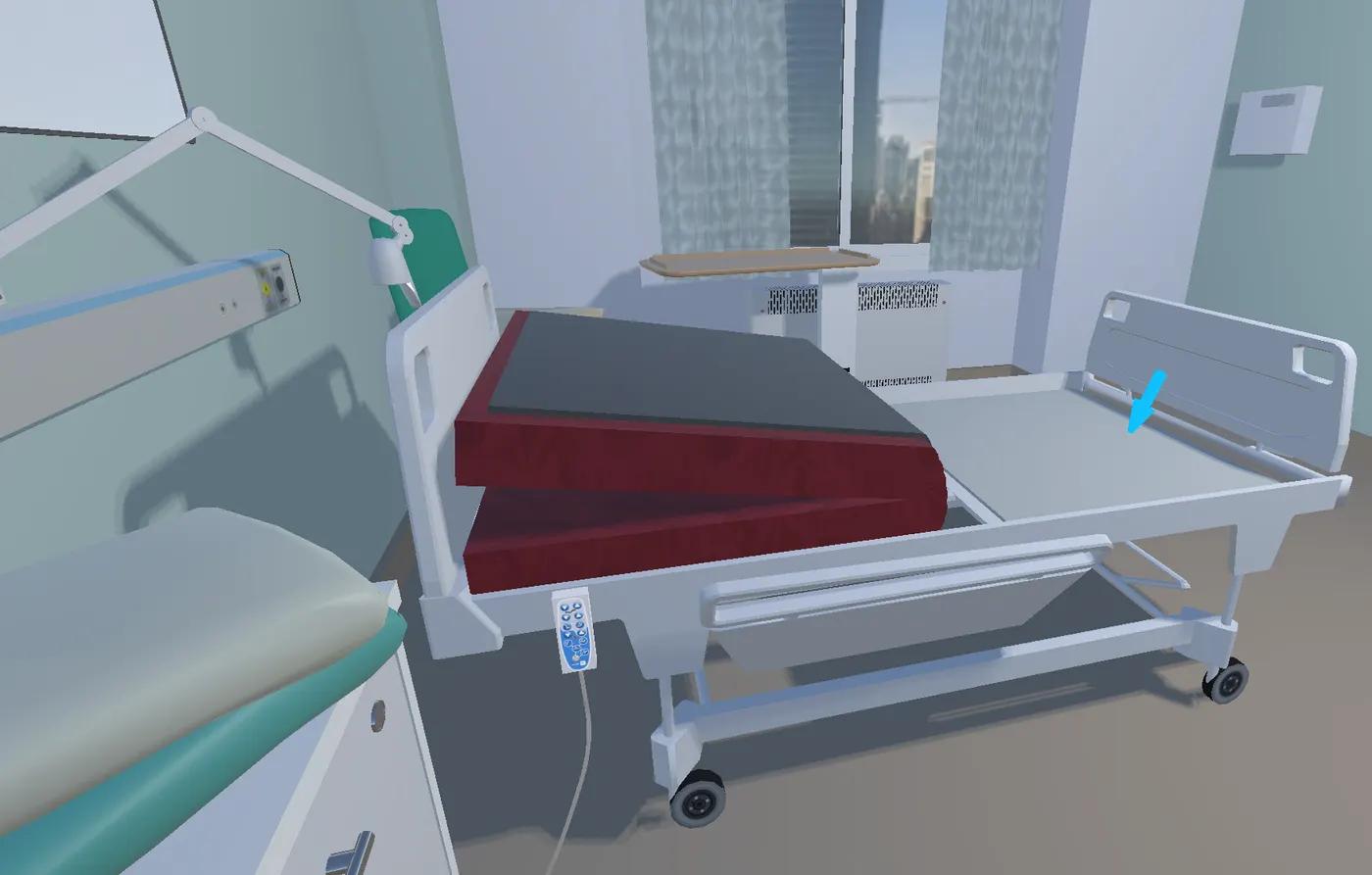 Training preview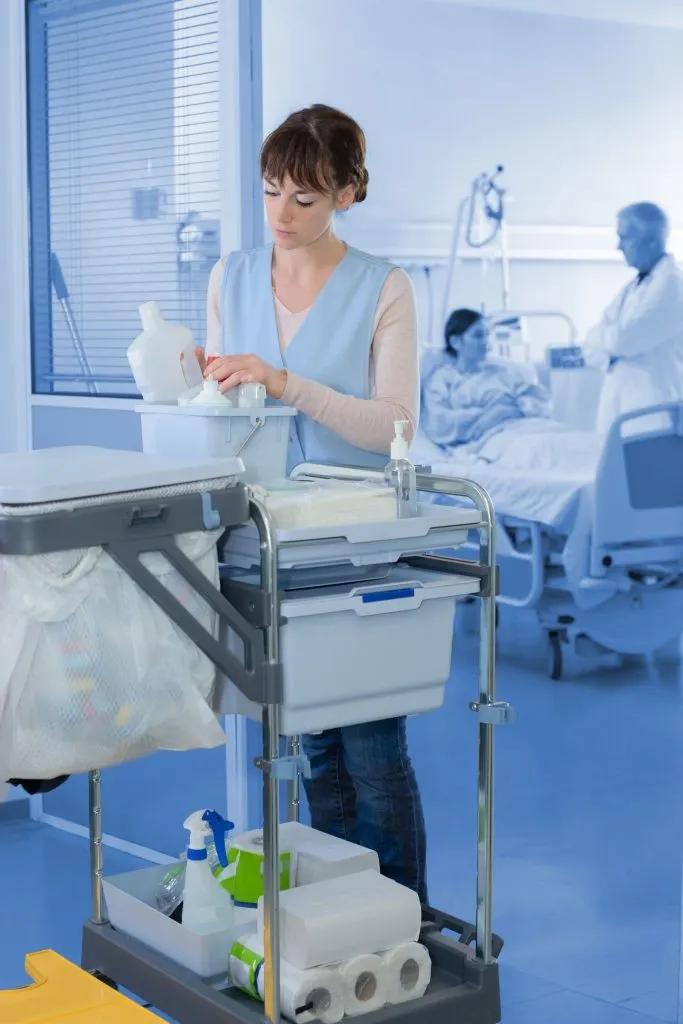
Cleaning teams in hospitals are often composed of various nationalities. With the new multilingual feature, the trainer simply speaks in their own language. Every trainee receives the explanation in their headset as audio and text in their own supported language. This allows a single trainer to guide colleagues of different nationalities in the same session.
The built-in AI coach also helps with going through the exercises. During the demo, we will discuss which languages your team needs and which ones are available.
In their own language, as always.
As audio in the headset, in their own supported language.
As text in the same language, so the explanation can be both heard and read.
One trainer guides multiple nationalities, with explanations in each trainee's supported language.
During onboarding there is a lot to explain: which material do you use, where do you start and what must you not skip? In VR, employees can practice these actions without disturbing patients. The trainer can discuss the approach with them before they start working on the ward under supervision.
Practicing with the use of materials, cleaning surfaces and the correct working posture.
Practice a systematic approach that helps avoid missing spots and prevents re-contamination, alongside your own work instructions.
VR supports your local protocols and practical assessment on the work floor. It does not replace them.
The hospital program consists of an introduction and twelve cleaning tasks. Below is the complete overview of tasks. Afterward, we show a number of exercises with images from the training.
The introduction familiarizes participants with the controls and the virtual room. Which agents and working methods they use in the department always follow from your own hospital protocols.
This overview describes the complete hospital program; not all parts have been released yet. We agree in advance which modules you can view in the demo. Click on an image below to enlarge it.
Participants practice with the bed, the mattress, the bed rails, and the surrounding surfaces. On-screen instructions show which part is up next.
“Bend the head in an L-shape so you can reach the surface without bending your neck too far.” The AI coach in the headset guides technique and posture step by step, where available in the participant's language.
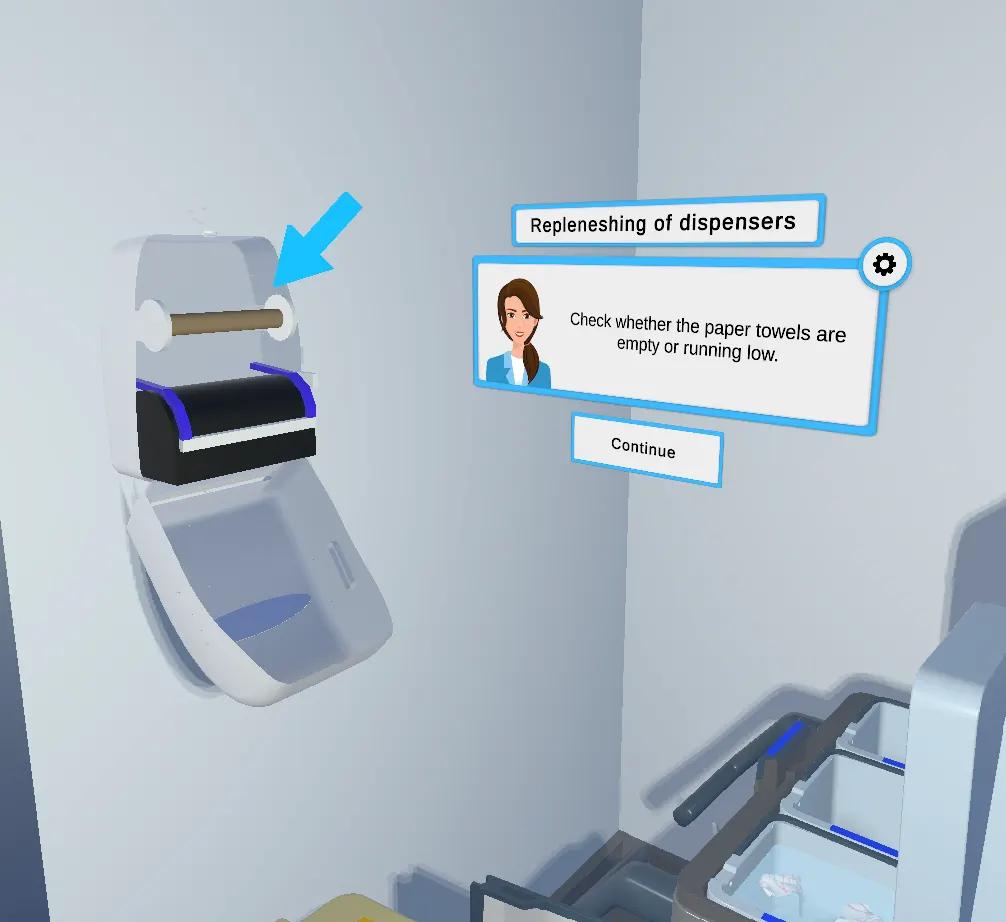
From toilet seat to towel dispenser: participants practice what they clean, where they start and what they check, and then discuss their approach with the trainer.
The training starts with an explanation of the controls. For example, participants practice touching a faucet and using the grip button. This is followed by the cleaning exercises.
The screenshots show hospital cleaning VR training modules that are still under development. Which exercises you see in a demo will be agreed upon with you in advance; not every module shown has been released yet.
One colleague performs the task wearing the VR headset, while the other watches along. Afterward, they switch and discuss what went well and what could be improved.
Arrows and markers show what the participant needs to do. In addition, the trainer can provide explanations, which the trainee hears and reads in their own supported language.More about multilingual training
Repeat exercises until they feel familiar, without disturbing patients or working with real supplies and waste.
Use a suitable space at your own location. You do not need to keep a patient room vacant for this and can let employees practice individually or in pairs.
Track participant progress and results in the training portal and export reports for your training records.
Add VR exercises to your onboarding program.
Employees practice actions in VR. On the ward, they learn to apply these according to your hospital protocols, under the guidance of your own trainers. The training is separate from the FacilityApps software for organizing daily cleaning.
FacilityApps already offers VR training for material use, ergonomics, and sanitary cleaning, among other things. With the Hospital Cleaning Training Modules, we are significantly expanding that offering: employees now also practice tasks in patient rooms and hospital sanitary facilities.
Tap the overview to enlarge. The screenshot is in English. Which modules you receive depends on the package we agree upon together; not every module is included in every license. Shown duration is indicative.
A separate, hospital-specific extension: patient room and bed, dusting with coaching, hospital sanitary facilities and dispensers. The sanitary training for hospitals is proprietary content, separate from the general Sanitary Cleaning module.
In a demo, we show the exercises and discuss how you can use them in your training. The button below takes you to the FacilityApps request form. We will then contact you to schedule an appointment.
hospital cleaning VR training modules, so that your request reaches the right team.hospital cleaning VR training modules – cleaning company.The exercises you see in the demo are agreed upon in advance; not all modules shown have been released yet. Other question? Use the FacilityApps contact page.
As a practice step in the onboarding or training process: trainees practice technique and work sequence in VR, often in pairs, and discuss this with the trainer. This is followed by guidance and practical assessment on the ward according to your own protocols. The portal shows who has completed which exercises.
Yes, that is possible. A cleaning company can prepare its employees with the same exercises that the hospital considers important, and share reports on training progress in discussions with the client. The protocols and on-site assessment remain leading. How you arrange the collaboration and licenses will be discussed in the demo.
The hospital modules are a significant expansion of the VR training offering from FacilityApps, built on top of the standard modules. They complement the software for hospital cleaning, but are not part of it.
No. Which standard and hospital modules you receive depends on the agreed package. See the broader offering.
No. It complements your local protocols and practical assessment. Use it to prepare and repeat; continue to assess on the work floor.
The training results show what someone has practiced in VR. They are not a certification and do not prove how clean a department is or how many infections are prevented. For that, the hospital's practical assessment and quality controls remain necessary.
The trainer speaks in their own language. Each trainee receives that explanation in the headset as audio and text, in their own supported language. This is how a single trainer guides trainees of different nationalities. Apart from that, the AI coach guides trainees through the exercises. Which languages are supported varies; please check this during the demo.
Progress and training results of participants, with exportable reports. The portal tracks learning; it does not measure hygiene in your departments.
We coordinate the exercises in a demo in advance. Not all modules on this page have been released yet.
Images with "Training preview" are screenshots of training content in development.